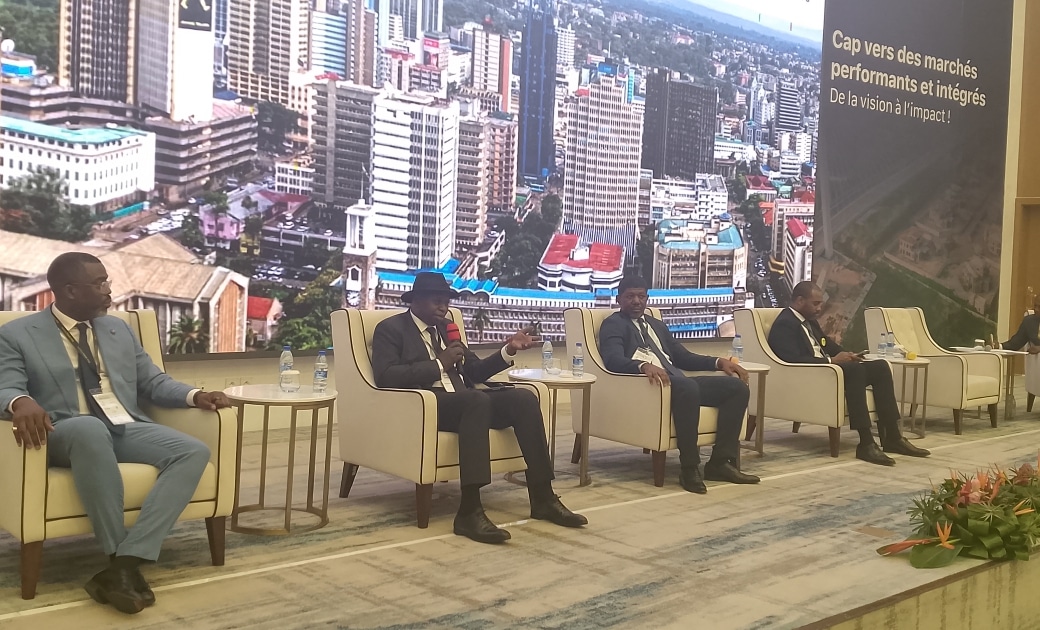
CEMAC Faces New Financial Frontiers
The Central African Economic and Monetary Community (CEMAC) is experiencing a significant transformation within its financial landscape. The emergence and rapid expansion of non-traditional financial instruments, such as cryptocurrencies, fintech solutions, and decentralized credit platforms, are challenging the established banking system. While these innovations present fresh avenues for credit access, they also introduce substantial regulatory complexities for authorities.
Experts across the region share a common concern: the absence of a unified regulatory framework leaves member states vulnerable to considerable risks. An analyst specializing in regional monetary affairs noted, "Alternative finance is growing at a speed that institutions did not anticipate. Without appropriate governance, we risk the emergence of macroeconomic imbalances."
Current Regulatory Gaps and Their Implications
Presently, the oversight of these novel financial tools is fragmented. Each CEMAC member state operates under its own legislation, which is often incomplete or outdated in the face of financial innovation. This patchwork of regulations creates significant grey areas where risks can accumulate without consistent monitoring. The monetary authorities of CEMAC, including the Bank of Central African States (BEAC), have recognized this vulnerability.
Informal credit institutions, digital money transfer platforms, and parallel financing schemes largely operate outside traditional control mechanisms. This situation not only threatens regional financial stability but also constrains the ability of central banks to implement effective monetary policy.
Recommendations for Bolstering Governance
Financial experts have put forth several converging recommendations to address these challenges:
- Harmonization of Prudential Standards: A unified regional framework is deemed essential to establish common capitalization thresholds, transparency rules, and reporting obligations applicable to all alternative finance participants.
- Creation of a Dedicated Supervisory Authority: The establishment of a specialized supervisory body with effective powers is seen as crucial. A regional financial sector official emphasized, "It's not enough to legislate; we must also have the human and technical resources to enforce the rules." This entity would work in coordination with national central banks and sectoral regulatory bodies.
- Enhanced Transparency of Financial Flows: Experts advocate for mandatory regular data reporting from alternative finance platforms to authorities. This would enable real-time surveillance and early detection of anomalies.
Economic and Social Imperatives
The aim of strengthened governance is not to stifle financial innovation but to channel it responsibly. Financial inclusion, a key objective for CEMAC economies, relies on intelligent regulation that protects consumers while fostering access to credit. Small and medium-sized enterprises, which often struggle to access traditional bank credit and turn to less secure channels, stand to benefit significantly from better oversight of alternative finance. Improved governance could build bridges between the formal sector and alternative instruments, thereby reducing information asymmetries and default risks.
Urgency for Regional Stability
The current geopolitical and economic climate intensifies the need for these reforms. External shocks, such as oil price volatility and currency instability, directly impact CEMAC economies. Poorly regulated alternative finance could amplify these shocks, further destabilizing member states. Experts also highlight the risks of money laundering and terrorist financing. Without adequate control mechanisms, alternative finance can become a conduit for financial crime. Strengthening governance is therefore synonymous with enhancing regional financial security.
Future Actions and Outlook
Several initiatives are already underway, with working groups comprising central banks, finance ministries, and private sector experts. Their objective is to develop a draft of harmonized regional directives in the coming months. This effort aligns with a broader trend among African regional organizations, from ECOWAS to SADC, to better regulate alternative finance. CEMAC, with its unique challenges and opportunities, must chart its own course, drawing inspiration from best practices without merely replicating unsuitable models.
Source: Original Article